
Battlefield’s Next Frontier: How a Helldivers 2-Esque Visual Glitch Could Redefine Player Engagement and Game Development








Popular Now
 Schedule I
 NBA 2K24
 Fall Guys
 FIFA 23
 Free Fire Max
 Grand Theft Auto V
 Black Myth: Wukong
 Poppy Playtime
The Legend of Zelda
Poppy Playtime
The Legend of Zelda
 League of Legends
 The gaming community is abuzz with speculation regarding the next installment in the venerable Battlefield franchise. While details remain scarce, a recent, albeit hypothetical, discussion has captivated fans: the potential for humorous, Helldivers 2-style visual glitches appearing in what many are referring to as ‘Battlefield 6.’ This unexpected convergence of ideas highlights a fascinating shift in player perception and the evolving challenges faced by developers in the high-stakes world of AAA game production.
For years, visual glitches were almost universally considered detrimental, a mark of incomplete or poorly optimized software. They disrupted immersion, led to frustration, and often necessitated urgent patch updates from developers. However, the immense popularity and widespread embrace of games like Helldivers 2 have introduced a new dynamic. Helldivers 2, a cooperative third-person shooter, has become renowned not just for its engaging gameplay but also for its array of often hilarious and bizarre visual bugs that, rather than detracting from the experience, often add to its chaotic charm and memetic appeal within the community. This paradigm shift begs the question: could a similar phenomenon positively impact the future of the Battlefield series?
The Legacy of Glitches: From Frustration to Fandom
Historically, the Battlefield franchise, developed by DICE and published by EA, has aimed for a realistic and immersive portrayal of large-scale warfare. Players expect high-fidelity graphics, robust mechanics, and a seamless multiplayer experience. When glitches did occur in titles like Battlefield V or Battlefield 2042, they were typically met with significant backlash, ranging from minor annoyances like clipping issues to game-breaking exploits that undermined competitive integrity. The development teams often had to prioritize rapid bug fixes to restore player confidence and maintain their committed player base.
However, the landscape has subtly shifted. The advent of persistent online service games means that titles evolve continuously post-launch. In this environment, minor visual anomalies, especially those that are purely cosmetic and do not impact gameplay balance, can sometimes be embraced. Helldivers 2 exemplifies this, with its ragdoll physics leading to absurd player deaths or enemies phasing through terrain creating moments of shared laughter rather than outright anger. This ‘bug-as-feature’ mentality, while rare, signifies a community that finds humor and shared experience even in imperfections.
Understanding the ‘Helldivers 2-Style Glitch’ Phenomenon
When discussing a ‘Helldivers 2-style visual glitch’ for Battlefield 6, we are not suggesting game-breaking exploits or issues that fundamentally compromise the integrity of the game. Instead, the focus is on graphical quirks that are:
- Visually Humorous: Bugs that result in comical animations, physics oddities, or bizarre character model contortions that elicit laughter.
- Non-Impactful to Gameplay: Crucially, these glitches should not confer any unfair advantage, cause crashes, or prevent players from enjoying the core mechanics.
- Shareable and Memetic: Moments that are perfect for capturing and sharing on social media, fostering community engagement and in-jokes.
- Infrequent and Unpredictable: The charm often comes from their unexpected nature, rather than being a constant visual distraction.
Imagine a soldier in the midst of a heated battle suddenly experiencing a brief, comical physics spasm, or a vehicle briefly defying gravity in a harmless, yet visually absurd manner. Such moments, if rare and benign, could inject a unique layer of levity into the otherwise intense Battlefield experience, resonating with a player base increasingly appreciative of organic, emergent humor.
The Technical Challenges and Developer Perspective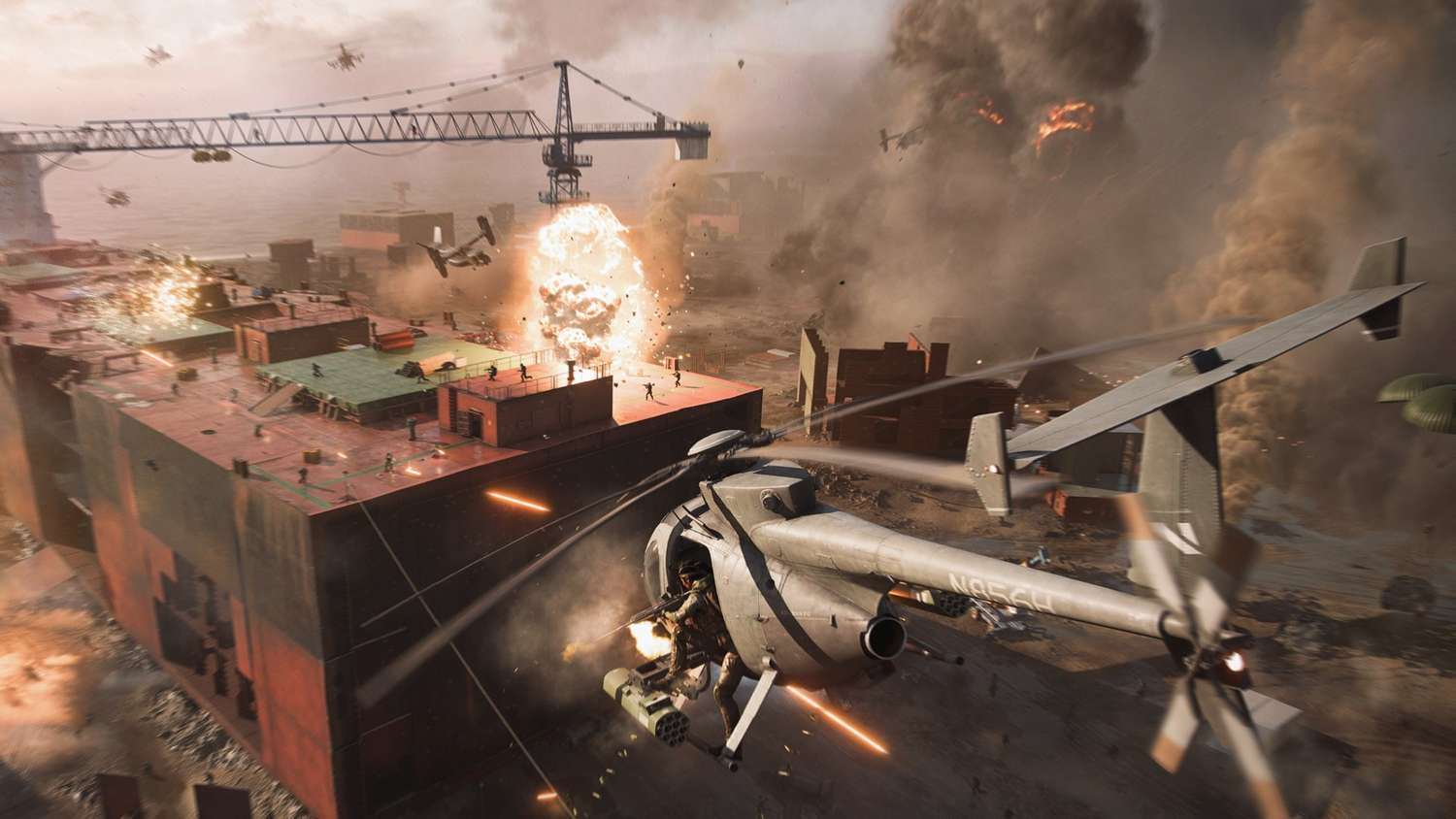
From a game development standpoint, creating a high-fidelity multiplayer shooter like Battlefield involves immense complexity. Modern game engines, intricate physics systems, and vast environments with countless interacting elements make bug prevention an incredibly challenging task. Developers at DICE pour countless hours into quality assurance, attempting to iron out every single visual artifact and gameplay bug before launch and through subsequent updates. The pressure to deliver a polished product, especially for a franchise with such a strong legacy, is immense.
However, the rise of community-driven humor around glitches presents a peculiar dilemma. Should developers actively try to ‘fix’ every single minor visual bug, even those that have become beloved by the community? Or is there a strategic advantage in allowing certain benign, humorous glitches to persist, contributing to the game’s unique identity? This is a fine line to walk. An intentional approach to ‘humorous bugs’ could backfire, appearing disingenuous or signaling a lack of commitment to quality. The magic of Helldivers 2’s glitches often lies in their accidental, organic nature.
Implications for Player Experience and Engagement
A hypothetical embrace of ‘charming’ visual glitches in Battlefield 6 could have several interesting implications for player experience and the title’s overall reception:
- Enhanced Community Bonding: Shared experiences of hilarious glitches can create inside jokes and foster a stronger sense of community among players. It gives them unique stories to tell and moments to relive.
- Increased Content Virality: In the age of TikTok, YouTube Shorts, and Twitch, visually amusing bugs are prime material for viral content. This organic marketing can significantly boost a game’s visibility and appeal, attracting new players who are drawn to the game’s lighter side.
- Reduced Player Frustration (Paradoxically): If players come to expect and even enjoy certain harmless visual quirks, their overall tolerance for minor imperfections might increase, reducing the potential for negative feedback on purely aesthetic issues.
- A Unique Identity: While Battlefield is known for its realism, a touch of unexpected, benign absurdity could help the next installment carve out a distinct identity, setting it apart from competitors and even previous titles in the series.
This does not mean that core gameplay issues, server stability problems, or genuinely disruptive bugs should be tolerated. The distinction is crucial: ‘charming’ glitches are those that add flavor without undermining the competitive or immersive core of the game. High-CPC keywords such as ‘Battlefield multiplayer,’ ‘online shooter performance,’ ‘next-gen graphics issues,’ and ‘game development challenges’ frequently highlight the community’s demand for high quality, but also its capacity for humor when presented with harmless anomalies.
The Future of Battlefield and Bug Management
As DICE and EA continue to develop the next iteration of Battlefield, they will undoubtedly face pressure to deliver a game that is technically sound, visually stunning, and engaging. The experiences of Battlefield 2042 have set a high bar for post-launch support and the critical importance of a stable, feature-rich release. While it is highly unlikely that developers would intentionally leave in bugs, the community’s reaction to similar phenomena in Helldivers 2 offers an intriguing case study.
The takeaway here is not that Battlefield 6 should be deliberately buggy, but rather that the gaming audience’s relationship with minor imperfections is evolving. A nuanced approach to bug triage, where truly game-breaking issues are prioritized, while certain benign, visually amusing anomalies might be given a lower priority for immediate removal, could be a subtle shift. This would allow the community to organically discover and celebrate these quirks, contributing to the game’s unique lore and shared experience. Ultimately, the quality of a ‘multiplayer FPS’ game is judged on its core mechanics and performance, but the ancillary elements, including its accidental humor, can profoundly shape its enduring legacy and player loyalty.
The potential for a ‘humorous Helldivers 2-style visual glitch’ in the next Battlefield game serves as a compelling thought experiment. It underscores the evolving dynamics between developers and their communities, highlighting how player culture can sometimes transform perceived flaws into beloved features. As the gaming industry progresses, understanding and adapting to these subtle shifts in player psychology will be crucial for creating titles that not only perform well but also capture the hearts and imaginations of millions.