
Major Setback for Nintendo: Japan Patent Office Rejects Key ‘Monster Capture’ Patent Application Citing ARK, Monster Hunter, and Craftopia as Prior Art in Palworld Legal Battle









Popular Now
 Black Myth: Wukong
PUBG Mobile
Black Myth: Wukong
PUBG Mobile
 Garena Free Fire: Kalahari
 Minecraft
 Valorant
God of War Ragnarök
Valorant
God of War Ragnarök
 Candy Crush Saga
 BeamNG.drive
 Counter-Strike 2
 EA SPORT FC 25
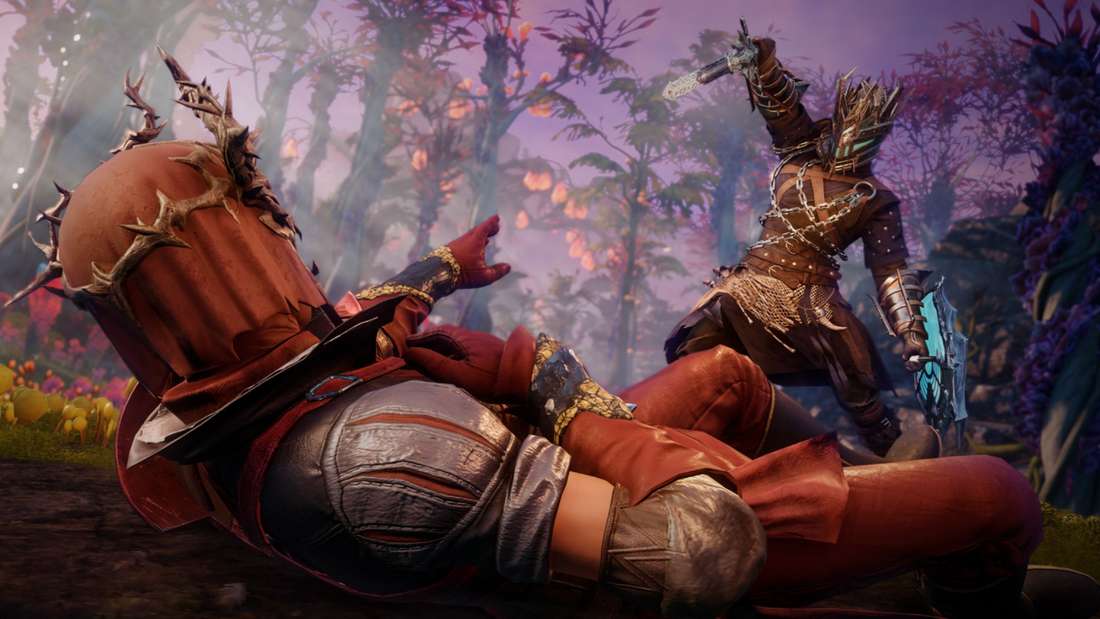 In a significant development that could reshape the legal battle between Nintendo and Pocketpair, the developer of the breakout hit Palworld, the Japan Patent Office (JPO) has issued a preliminary rejection for a key Nintendo patent application related to creature-catching mechanics. The JPO’s decision directly undermines two of the three patents Nintendo is currently asserting in its ongoing patent infringement lawsuit against Pocketpair in the Tokyo District Court.
The core of the JPO’s finding is that the claimed invention in Nintendo’s application (No. 2024-031879)—which relates to systems for capturing field characters in a virtual space—lacks an “inventive step.” In essence, the JPO determined that the concepts were not novel and would have been obvious to a person with ordinary skill in the art, due to the existence of similar mechanics in pre-existing games and publicly available information.
The Role of Prior Art: Why ARK, Monster Hunter, and Craftopia Matter
The JPO examiner specifically cited several older video games as prior art—evidence of similar technology existing before Nintendo’s patent was filed (which traces back to December 2021). These references are pivotal to the JPO’s conclusion:
- ARK: Survival Evolved: The popular survival game, released in 2017, features mechanics where players tame dinosaurs and other creatures by increasing a parameter (like a “coma value”) through various means, including the use of specialized tools or projectile weapons. This directly relates to the concept of reducing a creature’s ability to resist capture.
- Monster Hunter 4 (and 4G/Ultimate): The JPO cited manuals related to this Capcom franchise, noting the existence of “anesthetic balls” and other items used to subdue large monsters for capture, establishing a long history of item-based creature control outside of the Pokémon universe.
- Pocketpair’s Own Craftopia: Released in 2021 before Palworld’s massive launch, this game features its own monster-catching and survival mechanics, which Pocketpair’s defense has already highlighted as a foundational prior art reference.
This ruling is seen as a major validation of Pocketpair’s legal strategy, which has consistently argued that Nintendo is attempting to monopolize broad, generic gameplay concepts that have been standard in the industry for years.
Impact on the Palworld Lawsuit: Undermining Nintendo’s Case
While the JPO’s decision to reject the patent application is not a final ruling, and it does not automatically invalidate Nintendo’s other two patents currently in the court case, its implications are profound:
- Weakening the Patent Family: The rejected application is closely linked—it is a sibling and parent to the two other patents Nintendo is using against Pocketpair (JP7493117 and JP7545191). Patent analysts suggest that a significant flaw found in one member of a patent family can be indicative of validity issues for the entire set. The same “lack of inventive step” argument can now be more strongly applied to the other asserted patents.
- Influencing the Judge: Although the Tokyo District Court judge is not legally bound by the JPO’s decision, judges often give substantial weight to the technical and novelty determinations made by specialized patent examiners. The finding provides strong, official support for Pocketpair’s central defense that the patents are invalid due to prior art.
- Forcing Nintendo’s Hand: Nintendo now has a limited window (typically 60 days) to either abandon the application or submit amended claims to try and convince the examiner that a truly inventive element exists. If the application is finally refused, the process could escalate to an appeal in the Intellectual Property High Court (IPHC), which would prolong the dispute well into 2026.
The development further highlights the significant challenges Nintendo faces in patenting what many in the gaming community consider to be obvious game mechanics. The company has already had to amend one of its other patents mid-litigation, a highly unusual move that signals underlying concerns about the patents’ robustness.
Industry-Wide Ramifications: The Future of Gaming Patents
This episode serves as a critical test case for the video game industry. If Nintendo were successful in asserting broad patents on core gameplay loop mechanics like creature-capture and battle initiation, it could set a dangerous precedent, stifling innovation and creating a hostile legal environment for smaller developers. The JPO’s current stance, relying on a robust history of prior art from titles across the industry, is being viewed as a protective measure against “patent thickets”—a dense collection of related patents designed to block competitors from operating in a specific domain.
The rejection reinforces the principle that game rules and abstract concepts alone are not patentable; a patent must protect a genuinely novel technical implementation. For now, the legal pendulum has swung in favor of Pocketpair and the concept of an open, shared history of game design mechanics.
High-CPC Keywords: Gaming Patent Lawsuit, Intellectual Property in Gaming, Patent Invalidity Challenge, Palworld Lawsuit Update, JPO Patent Rejection, Game Mechanic Patentability.
Would you like me to research the specific details of the remaining two patents Nintendo is asserting against Pocketpair to understand their current legal vulnerability?