
Temple Run 3 Silently Emerges in Soft Launch: First Impressions and Gameplay Analysis










Popular Now
 Counter-Strike 2
 Stumble Guys
Garena Free Fire: Kalahari
Stumble Guys
Garena Free Fire: Kalahari
 Genshin Impact
 Candy Crush Saga
Geometry Dash
Candy Crush Saga
Geometry Dash
 PUBG Mobile
 Rust
Rust
 Fall Guys
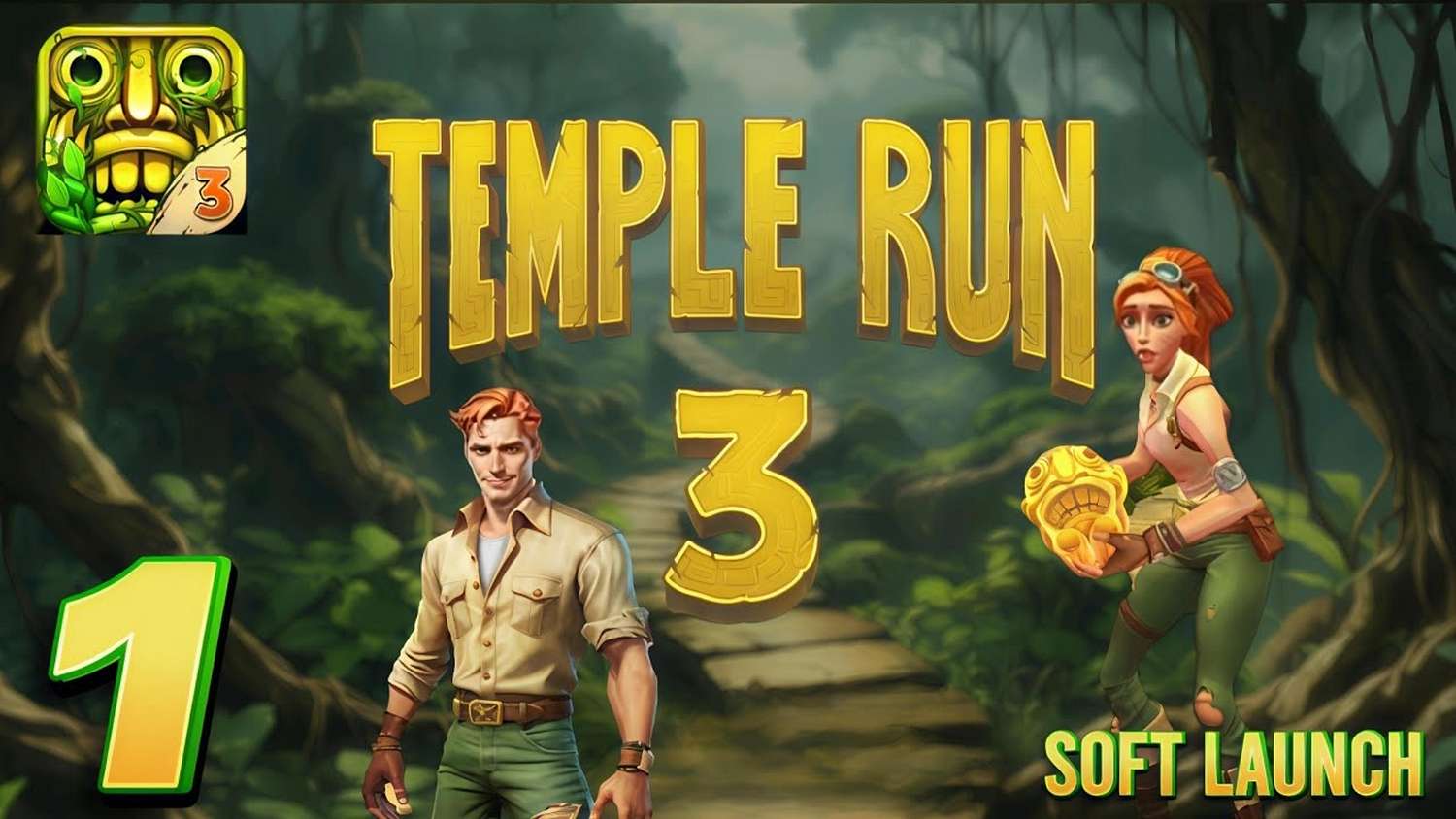 Breaking News in Mobile Gaming: The highly anticipated sequel, Temple Run 3, has quietly entered a soft launch phase in select international markets, generating significant buzz among long-time fans and mobile gaming enthusiasts. Developed by Imangi Studios, the original creators of the genre-defining endless runner, this new iteration promises to build upon its predecessors’ monumental success. Early player reception, primarily from regions where the game is accessible, indicates a promising evolution, setting the stage for what could be another global phenomenon in the competitive mobile game landscape. The strategic soft launch allows developers to fine-tune mechanics, gather invaluable user feedback, and stress-test server infrastructure before a wider release, a common practice for titles expecting massive player bases and high engagement metrics. This initial rollout offers a crucial glimpse into whether Temple Run 3 can truly redefine the endless runner genre once more, providing a refreshed experience while retaining the addictive core gameplay that captivated hundreds of millions.
The announcement, or rather the discovery, of Temple Run 3’s soft launch has ignited discussions across gaming forums and social media. Gamers are dissecting every screenshot and early gameplay video, eager to understand the improvements and innovations Imangi Studios has implemented. The stakes are particularly high for a franchise with such a storied legacy, as it aims to compete with a saturated market of clones and other popular mobile titles. Our initial analysis, based on available information and early reviews from international players, suggests that Temple Run 3 is poised to deliver a refined and visually stunning experience, potentially reclaiming its throne as a top-tier casual gaming application.
Evolution of Gameplay: What’s New in Temple Run 3?
From the outset, Temple Run 3 appears to elevate the visual fidelity and environmental complexity that players have come to expect. Early reports highlight significantly upgraded graphics, featuring more intricate textures, dynamic lighting, and richer environments that enhance immersion. Players are reportedly experiencing new biomes and challenging obstacles that go beyond the familiar ancient temples and jungle paths. The core endless runner mechanic remains intact – swipe to turn, jump, and slide – but with subtle refinements that improve responsiveness and feel. This dedication to enhancing the fundamental gameplay loop is critical for retaining both veteran players and attracting new audiences, ensuring that the experience feels fresh yet familiar.
Beyond graphical enhancements, Temple Run 3 introduces a suite of new power-ups and character abilities that add strategic depth to each run. Players can expect novel ways to escape the demonic monkeys, evade traps, and collect coins, adding a layer of tactical decision-making to the fast-paced action. Some early reviewers praise the expanded roster of playable characters, each reportedly featuring unique attributes or starting bonuses, encouraging experimentation and offering varied gameplay styles. This expanded customization and progression system is a significant step forward, aiming to provide more long-term engagement and replayability, which are key drivers for sustained player interest in free mobile games.
A critical aspect observed during this soft launch period is the introduction of more complex challenges and objectives beyond simply surviving as long as possible. Daily quests, timed events, and potentially even competitive leaderboards are rumored to be integrated, providing players with constant motivation to return to the game. These features are essential for modern mobile titles, as they foster a strong community and encourage regular engagement, ultimately contributing to the game’s overall commercial success and its ability to generate consistent gaming revenue through in-app purchases and advertisements. The developers seem to understand the delicate balance between challenge and reward, a hallmark of successful casual gaming experiences.
Player Reception and Early Impressions
The initial feedback from players in soft launch regions has been largely positive, with many commending the game’s visual overhaul and smoother performance. Players appreciate the refined controls and the sense of nostalgia combined with fresh content. The general consensus points towards a game that respects its heritage while bravely venturing into new territory. Critical mentions include the addictive nature of the gameplay, which remains as compelling as ever, and the excitement surrounding new discoveries within the game world. This positive sentiment is crucial for building momentum ahead of a global launch and ensuring strong user acquisition.
- Enhanced Graphics: Users consistently praise the upgraded visuals, noting the improved detail and vibrant environments.
- Smoother Performance: Many report a more fluid and stable experience across various devices, indicative of strong optimization.
- New Content: The introduction of new characters, power-ups, and environments is a significant draw, offering novelty.
- Familiar Yet Fresh: Players enjoy the balance of retaining the classic Temple Run feel while introducing meaningful innovations.
- Monetization Concerns: While generally positive, some early feedback includes typical soft launch questions regarding the fairness and frequency of in-app purchase prompts.
However, as with any soft launch, there are areas flagged for potential improvement. Some players have voiced concerns about the initial pacing of progression, suggesting a need for balancing character upgrades or coin acquisition rates. Others have highlighted minor bugs or glitches, which are expected in a testing phase. Imangi Studios will undoubtedly be closely monitoring these early insights, using them to refine the game and ensure a polished product for its worldwide debut. Addressing these early player feedback points is vital for establishing player trust and long-term retention in the highly competitive mobile gaming market.
Monetization Deep Dive: Free-to-Play Strategy
The monetization strategy for Temple Run 3, as observed during its soft launch, appears to follow the standard free-to-play model prevalent in today’s mobile gaming ecosystem. This typically involves optional in-app purchases (IAPs) for currency, character unlocks, cosmetic items, and possibly progression boosts. The key for a game like Temple Run 3 is to strike a delicate balance: offering compelling reasons for players to spend money without alienating the free-to-play audience. Early indications suggest that while IAPs are present, the game remains enjoyable and progression is achievable for non-spending players, albeit at a slower pace. This approach is fundamental for sustainable mobile gaming revenue and fostering a broad player base.
High-CPC keywords such as ‘gaming investment’ and ‘in-app purchases’ become relevant here, as players evaluate the value proposition of spending money within the game. The success of Temple Run 3’s monetization will heavily depend on how well it integrates these purchases without creating a ‘pay-to-win’ scenario. Instead, developers often focus on ‘pay-to-progress-faster’ or ‘pay-for-cosmetics’ models, which are generally better received. From early player comments, the current implementation seems to lean towards cosmetic and convenience purchases, which is a healthy sign for a mass-market casual game.
Technical Aspects and Performance Optimization
Performance is paramount for an endless runner, where split-second decisions dictate success or failure. Early technical reviews from soft launch regions suggest that Temple Run 3 is remarkably well-optimized. The game runs smoothly across a range of Android and iOS devices, from older models to the latest flagships, a critical factor for reaching a global audience. Frame rates appear stable, and load times are minimal, contributing significantly to a seamless and engaging player experience. This level of optimization at the soft launch stage is commendable and indicative of Imangi Studios’ commitment to delivering a high-quality product.
The underlying game engine and asset management seem to have received substantial upgrades, allowing for the richer graphics without compromising on performance. This ensures that the intense, fast-paced action remains fluid and responsive, preventing frustrating lags that could detract from gameplay. For a game aiming for widespread adoption, ensuring accessibility across a diverse hardware ecosystem is not merely a technical detail but a strategic imperative. The robust performance observed so far bodes well for the game’s global rollout and its ability to retain players by offering a consistently reliable experience.
The Road Ahead and Market Impact
The soft launch period is an invaluable phase for game developers, allowing for data-driven decisions that shape the final product. Based on the positive early reception, Temple Run 3 appears to be on a promising trajectory. Imangi Studios will likely continue to iterate on the game, implementing player feedback, introducing new content, and further optimizing performance before committing to a full worldwide release. The success of this soft launch could reignite interest in the endless runner genre, potentially inspiring other developers to innovate within this established category.
As Temple Run 3 prepares for its global debut, its impact on the mobile gaming market could be substantial. It carries the weight of a beloved franchise, capable of attracting both long-time fans and a new generation of players. Its performance in terms of downloads, player engagement, and gaming investment will be closely watched by industry analysts. If it manages to capture the zeitgeist once again, Temple Run 3 could easily become one of the top casual games of the year, cementing its legacy and proving that even a classic formula can be successfully reinvented for a modern audience.
 Conclusion: A Promising New Chapter
The quiet soft launch of Temple Run 3 has unveiled a game that appears to be a worthy successor to its iconic predecessors. With its upgraded visuals, refined gameplay mechanics, expanded content, and generally positive early player reception, Imangi Studios seems to have successfully navigated the challenging path of evolving a beloved classic. While the soft launch phase will undoubtedly bring further tweaks and refinements, the initial impressions are overwhelmingly optimistic.
This new iteration holds the potential to not only satisfy the cravings of existing fans but also to attract a new wave of players, solidifying its position in the fiercely competitive mobile gaming arena. As the game inches closer to its full global release, the anticipation will only grow. Temple Run 3 is not just another endless runner; it represents a significant update to a genre-defining series, aiming to deliver a captivating and addictive experience that re-establishes its dominance in the casual gaming landscape. We eagerly await its worldwide debut to provide a comprehensive and definitive review of its final form.